
 NCCO International
The foodservice industry is entering a new era of operational efficiency, immersive brand experiences, and technology-driven decision making. This couldn’t have been more clear at the 2026 National Restaurant Association Show 2026 in Chicago, where AI-powered restaurant solutions and larger-than-life booth activations stole the spotlight.
This year’s show was also a reflection on an industry balancing economic pressure with innovation and creativity. As operators continue navigating rising food, labor, and operating costs, the technologies and strategies showcased throughout the show floor centered on helping restaurants do more with less.
And, most importantly, doing so without compromising the guest experience.
AI: The Show’s Buzziest Business Tool
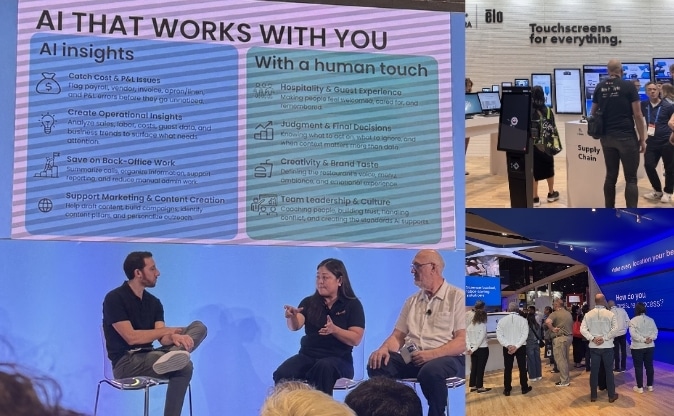
Unsurprisingly, one of the biggest trends across the show floor was the widespread presence of AI-powered solutions. Past shows often focused heavily on experimentation and hype. The conversations this year were noticeably more practical and operations-focused as AI tools have become normalized. Many of these tools were designed to step in to support human teams in ways previously inaccessible.
- Forecast customer traffic more accurately
- Optimize inventory and reduce over-ordering
- Track waste and portion control
- Automate repetitive back-of-house tasks
- Improve labor efficiency and scheduling
This shift aligns with broader industry trends. Nearly one-third of operators now view AI as one of the biggest technology opportunities in 2026 according to industry research, and the emphasis for restaurants is now on which tools best fit their operations and how quickly teams can implement them effectively.
Technology providers also focused heavily on integrations and real-time data visibility, reinforcing the growing demand for connected systems that simplify operations rather than complicate them.
Margin Pressure Is Driving Smarter Operations

Profitability, of course, remains the name of the game.
Operators continue to face mounting pressure from rising food, labor, and operating costs while consumers remain highly price sensitive. According to Restaurant365 data referenced throughout the event:
- 88% of operators expect food costs to rise
- 87% anticipate increased labor costs
Efficiency has therefore become one of the industry’s most valuable currencies.
Back-of-house technology solutions were especially prominent this year as well. Brands emphasized ROI through a number of metrics to focus on where to add value and reduce costs.
- Improved operational efficiency
- Leadership time savings
- Waste reduction
- Enhanced guest experiences
- Lower food and labor costs
Exhibitors were focused on practical tools operators can deploy immediately to protect margins and improve consistency.
The Expansion of Off-Premise Dining
Another key theme throughout the show was the continued growth of off-premise dining. Takeout, delivery, catering, and hybrid service models have become central to revenue streams, with operators reporting that nearly 29% of sales currently come from off-premise channels, and many targeting 35% by the end of 2026.
To put it simply, people are still ordering delivery an takeout like never before. That growth is creating increasing operational complexity, reflected in the number of exhibitors focused on delivering efficient takeaway and delivery infrastructure.
- Kitchen workflow optimization
- Packaging innovation
- POS integrations
- Pickup management systems
- Catering infrastructure
- Third-party delivery coordination
Many brands were therefore showcasing solutions designed to create smoother communication between POS systems, kitchen operations, and customer pickup experiences.
Booth Experiences Became Full-Scale Productions
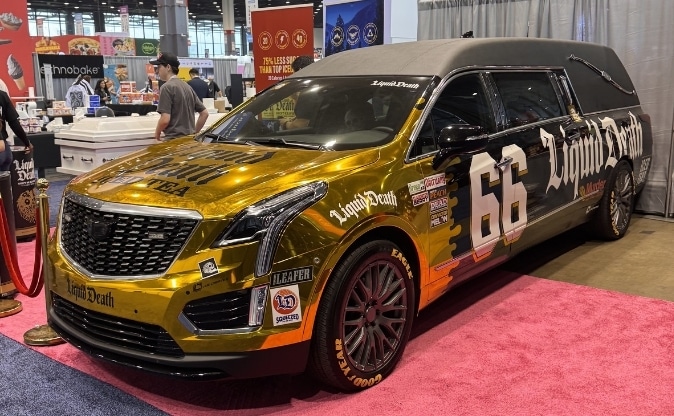
Perhaps the most prominent piece of the 2026 National Restaurant Show experience was the experience itself. How else to continue justifying visiting in-person, after all? The most memorable booths of 2026 leaned heavily into immersive activities, entertainment, and audience participation, and brands competed for attention through spectacle and activity as much as their products.
Grandeur was clearly a defining theme for booth aesthetics as many companies and brands went all-out. Some of the standout visual moments included a Formula One car mounted on a wall by Red Bul, a hearse and coffin display from Liquid Death, and a giant inflatable polar bear towering over the Coca-Cola booth
Exhibitors clearly understood that standing out in a crowded show environment requires creating moments attendees want to photograph, share, and remember: Mascots, oversized props, branded backdrops, and interactive photo opportunities appeared throughout the convention center. Tajín, for example, featured an entire Chicago-themed photo wall designed specifically for attendee engagement and social sharing.
Interactive Engagement Drove Booth Traffic

Similarly, the busiest booths were giving attendees the opportunity to actively participate with the product.
Food and drink sampling certainly remained one of the strongest traffic drivers, but brands expanded beyond traditional handouts into more personalized experiences. Heinz drew significant crowds by allowing attendees to create their own custom sauce flavors, for example.
Live demonstrations were everywhere as well. Many booths incorporated presenters, amplified sound systems, music, and digital displays to attract foot traffic and maintain energy throughout the day.
Digital signage itself was another major trend. Large-scale LED walls, animated content, and immersive booth displays became standard among major exhibitors, creating highly visual environments designed to stop attendees in their tracks.
Edgy and Irreverent Branding
Another noticeable shift was the increasingly bold and edgy tone many companies adopted in their branding and messaging. Exhibitors leaned into humor, shock value, and irreverent slogans to break through the noise of the crowded show floor.
One standout example came from Henkelman Vacuum Packaging, whose booth prominently displayed the slogan:
“We suck so your food doesn’t.”
Another company featured signage joking about “POS systems being a POS,” while SpotOn incorporated profanity into its marketing materials and distributed branded journals titled:
“Sh*t That Keeps Me Up at Night.”
The messaging reflected a broader trend toward more casual, attention-grabbing brand voices, particularly among technology companies trying to position themselves as relatable partners for stressed operators while producing meme-worthy moments.
But Small Details Still Matter
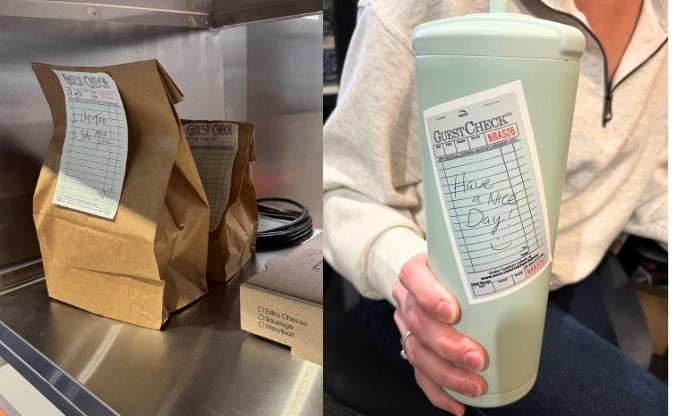
While large-scale booth activations and technology showcases dominated the floor, there were also subtle examples of how brands are paying attention to operational authenticity.
One detail that stood out was the use of NCCO’s GuestCheckTM products within exhibitor booth displays. Hatco Corporation, which specializes in food display shelving and merchandising equipment, incorporated to-go bags with attached guest checks as part of its booth props. It was a small but meaningful detail that reinforced how even display environments are becoming more grounded in real-world restaurant operations.
Labor Challenges Remain Front and Center
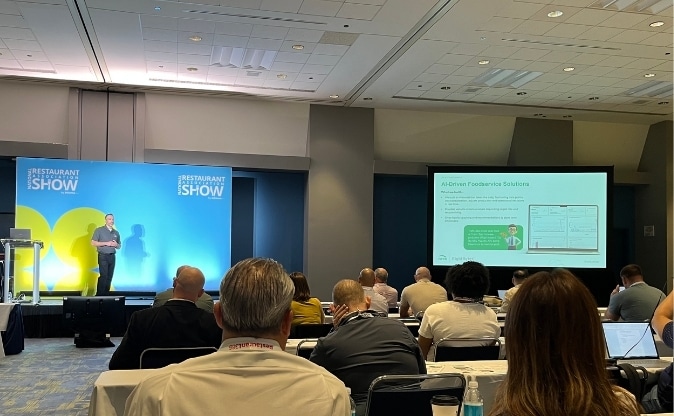
Labor challenges remain one of the industry’s biggest concerns. The workforce pipeline continues to tighten due to demographic changes and ongoing labor shortages. With fewer younger workers entering the workforce and continued pressure surrounding staffing and retention, operators are increasingly looking for ways to support employees while simultaneously reducing operational strain.
Framing technology as a tool that helps with areas that lead to high turnover (not as a replacement for workers, as many fear), was the focus for many exhibitors. The most efficient tools are the ones looking to reduce stress, work, and inefficiencies day-to-day.
- Reduce burnout
- Simplify repetitive tasks
- Improve training
- Increase operational consistency
- Allow employees to focus more on hospitality and guest interaction
Successful operators will likely be those who can balance automation with human experience; boosting efficiency behind the scenes to better improve the personalized human experience.
2026 National Restaurant Show
This year’s National Restaurant Association Show highlighted an industry actively evolving under pressure. Restaurants are facing rising costs, labor shortages, and changing consumer expectations. The show floor, however, demonstrated that operators and suppliers are responding with creativity, technology, and bold innovation.
Here are the biggest takeaways from NRAS 2026:
- AI is becoming operationally practical rather than experimental
- Margin protection is driving investment in smarter systems
- Off-premise dining continues to reshape restaurant operations
- Experiential marketing and interactive booths are becoming essential
- Bold branding and immersive engagement are dominating trade show strategy
- Technology is increasingly focused on supporting, not replacing, hospitality teams
If this year’s show was any indication, we can expect the future of foodservice to be more connected, more data-driven, and far more experiential for operators and guests alike. And while things often seem rather tumultuous in the foodservice industry, this gives us plenty of reason to be optimistic.