
 NCCO International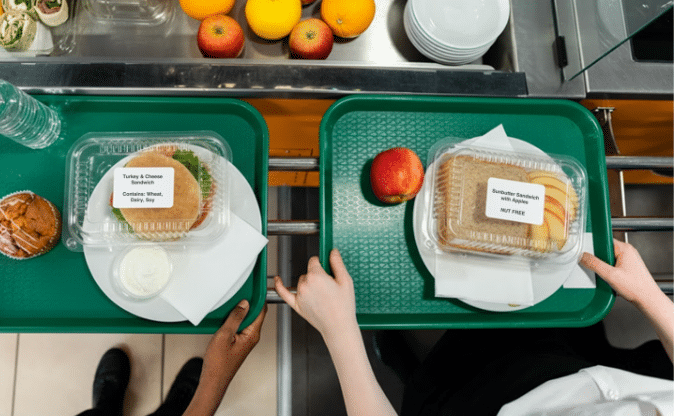
Millions of families across the country trust cafeteria teams to serve safe and nourishing meals when their children return to school each year. School nutrition programs must therefore meet not only allergen safety standards but also complying with USDA school meal nutrition standards. These standards set clear expectations for calories, sodium, added sugars, and other key nutrients, ensuring that meals served in K–12 cafeterias are both safe and healthful.
USDA guidelines, for example, limit added sugars in school breakfasts to less than 10 grams per serving and in school lunches to less than 10 percent of total calories. Sodium targets are phased in over multiple years, with upper limits for elementary, middle, and high school meals. Meeting these targets while maintaining efficient operations can be challenging for busy cafeterias, especially when preparing prepackaged or grab-and-go meals for students.
Clear, accurate labeling of ingredients, allergens, and nutrition facts are an essential part of keeping students safe. Proper labeling helps schools remain compliant, supports student health, and fosters trust among parents and students
Why Allergen Labels in Schools Matters More Than Ever
In 2016, a student at a suburban Illinois high school suffered a serious allergic reaction after unknowingly eating a sandwich containing peanuts instead of the expected pine nuts. The labeling error required emergency intervention and highlighted the importance of accurate allergen labeling in school cafeterias.
Beyond preventing emergencies, accurate labels ensure that students with dietary restrictions feel included and confident in what they eat. This applies not only to allergens but also to dietary concerns around sodium, added sugars, and other nutrients. In communal settings like school cafeterias, clear labeling builds trust and encourages healthy eating habits.
School Cafeterias Are Complex Environments for Nutrition, Allergen Labeling
School kitchens operate in high-volume, fast-paced environments. Food service staff manage rotating menus, seasonal ingredients, and strict nutrition targets while adhering to USDA school meal standards. Each menu change can introduce new allergens, sodium variations, or added sugar levels. Manual labeling alone can increase the risk of errors, making automated solutions critical for compliance and safety
Nutrition Facts and Ingredient Labeling Requirements for Prepackaged Meals
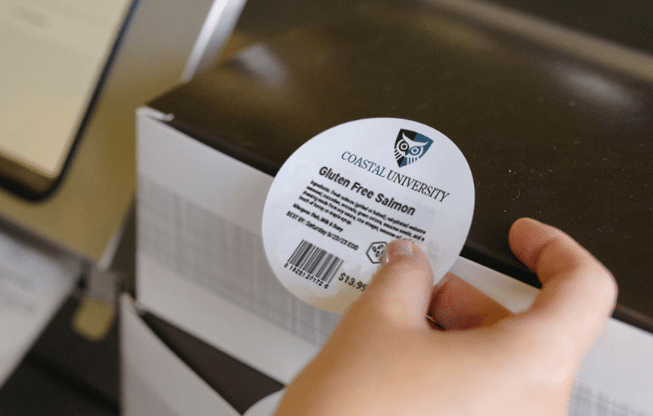
Schools are required to provide accurate nutrition information for meals, including grab-and-go or prepackaged items. USDA school meal standards require that labels reflect:
- Calories, total fat, saturated fat, and trans fat
- Sodium levels according to grade-specific targets
- Total sugars and added sugars
- Protein, fiber, and key vitamins and minerals
Ingredients must be listed in descending order by weight, and major allergens, such as peanuts, tree nuts, milk, eggs, soy, wheat, fish, and shellfish, must be clearly identified. Labels should be visible to students and staff, whether the meals are served in the cafeteria or packaged for take-home programs.
Automating nutrition facts and ingredient labeling simplifies compliance with these USDA requirements. Systems like DateCodeGenie® allow central kitchens to generate labels that reflect real-time menu data, including allergens, nutrition facts, and portion sizes, across multiple prep stations. This ensures schools meet both federal nutrition standards and state-level regulations while reducing the risk of human error.
The DateCodeGenie®: A Smarter Way to Label and Protect
NCCO’s DateCodeGenie® streamlines labeling operations in busy school kitchens, combining allergen safety with USDA nutrition compliance. Here is how this automated labeling system can help:
Labeling for Accuracy and Efficiency
From allergen warnings to nutrition facts and expiration dates, DateCodeGenie minimizes labeling mistakes. Custom templates allow instant updates across prep stations, ensuring menus remain compliant with USDA school meal standards.
Customizable Labels for Any Use Case
Labels can include nutrition panels, barcodes, school logos, and allergen info on cardboard, foil, plastic, or other surfaces. Sizes range from compact 1×1 inch squares to 2×8 inch full-panel labels for grab-and-go meals. Options include dissolvable, compostable, days of the week color-coded, or tear-proof materials that stand up to busy cafeteria environments.
View our selection of DateCodeGenie labels here
Time Savings and Waste Reduction
Automated labeling reduces the need for manual entries, freeing staff to focus on food prep and service. It also improves inventory control, helping to reduce food waste and improve operational efficiency.
Integrates with CBORD and Health-e Pro
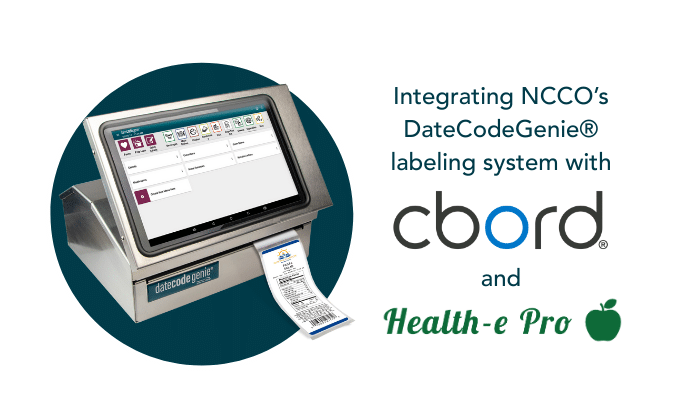
Integration with CBORD and Health-e Pro nutrition software allows schools to automatically generate labels with real-time menu data. This includes allergens, ingredients, and USDA-compliant nutrition facts, supporting a safer and more efficient meal service.
A Safer, Smarter School Year Starts Here
Meeting USDA school meal standards requires attention to allergens, sodium limits, added sugar limits, and accurate nutrition labeling. With DateCodeGenie®, school nutrition teams can deliver meals that are safe, compliant, and clearly labeled, whether serving hot lunches, grab-and-go meals, or take-home packages.
Request a personalized demo today and see how DateCodeGenie makes it easy to create a safer, more efficient school cafeteria operation that meets all USDA nutrition and labeling requirements.
DateCodeGenie Demo
"*" indicates required fields